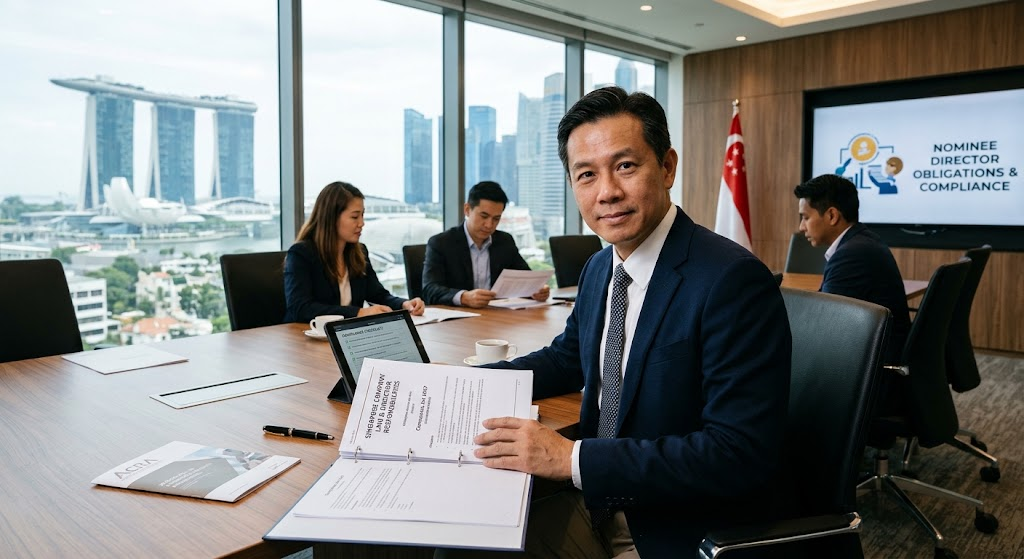

Establishing a company in Singapore can create valuable opportunities for international entrepreneurs. The country offers a well-developed business environment, a transparent regulatory system, and access to important regional and global markets. However, foreign business owners must understand certain local requirements before they can establish and operate a company.
One important requirement is having at least one director who ordinarily resides in Singapore. Entrepreneurs who do not have an eligible local representative may consider appointing a nominee director. Although this arrangement can help overseas founders meet the local residency requirement, it also involves important legal responsibilities that should never be overlooked.
A singapore nominee director is not simply an individual whose name appears in company records. The position carries statutory duties, governance obligations, and responsibilities under Singapore company law. Understanding these obligations helps business owners make informed decisions and maintain a compliant corporate structure.
1. Understanding the Role of a Nominee Director
A nominee director is appointed to a company’s board, often to help satisfy the requirement for at least one ordinarily resident director in Singapore.
This arrangement is commonly considered by foreign entrepreneurs who want to establish a Singapore company without immediately relocating to the country or appointing another suitable local individual.
However, the nominee director is still a legally recognised director of the company. The appointment does not remove the individual’s responsibilities under the Companies Act 1967.
A nominee director must act honestly, exercise appropriate care, and fulfil the duties associated with the position. They cannot automatically avoid responsibility by claiming that they simply follow instructions from the company’s shareholders or overseas owners.
Understanding this distinction is essential before entering into any nominee director arrangement.
2. Meeting Singapore’s Local Director Requirement
A Singapore private limited company must have at least one director who ordinarily resides in Singapore.
A foreign entrepreneur may own all the shares in the company, subject to applicable requirements, but full foreign ownership does not eliminate the resident director requirement.
If the founder does not have an eligible local individual available, a nominee director arrangement may provide a suitable option.
The appointed individual must meet the relevant eligibility requirements, including the applicable age and legal capacity conditions. Certain individuals may be disqualified from acting as directors under Singapore law.
Business owners should verify these conditions before proceeding. A professional corporate service provider can explain the appointment process and help organise the relevant documentation.
3. Legal Duties Under Singapore Company Law
One of the most important aspects of a nominee director appointment is understanding the legal duties attached to the position.
Directors must generally act in good faith in the interests of the company. They must also exercise reasonable care, skill, and diligence when carrying out their responsibilities.
These duties apply regardless of whether the director is an executive director, a non-executive director, or a nominee director.
Important responsibilities may include:
- Acting honestly and in the company’s interests.
- Exercising reasonable care and diligence.
- Avoiding improper use of company information.
- Managing potential conflicts of interest.
- Disclosing relevant interests in company transactions.
- Ensuring that statutory obligations receive appropriate attention.
A nominee director should not accept an appointment without understanding the company’s activities, financial position, and governance arrangements.
4. Responsibility for Corporate Compliance
Singapore companies must follow various statutory and administrative requirements throughout their operations.
These may include maintaining proper accounting records, filing annual returns, updating company information, and complying with applicable reporting obligations.
Directors have an important governance role in ensuring that the company takes these responsibilities seriously.
Although corporate secretaries and accounting professionals may handle specific administrative tasks, appointing them does not automatically remove directors’ legal responsibilities.
A nominee director should maintain appropriate oversight and seek clarification when important compliance matters arise.
For example, if a company repeatedly fails to maintain accounting records or ignores statutory notices, the director should not simply assume that the issue is someone else’s responsibility.
5. Understanding the Limits of Shareholder Instructions
Foreign shareholders often make the major commercial decisions for their Singapore companies. They may decide which products to sell, where to invest, and how to develop the business.
However, a nominee director cannot treat every shareholder instruction as automatically binding.
The director must exercise independent judgment and consider whether proposed actions are consistent with the company’s interests and applicable laws.
If shareholders request an action that appears unlawful or creates serious compliance concerns, the nominee director should investigate the matter and obtain appropriate professional advice.
A nominee arrangement does not create an exemption from directorial duties. The responsibilities remain attached to the office itself.
6. Managing Conflicts of Interest
Conflicts of interest can arise when a director’s personal interests, external business relationships, or other responsibilities affect their ability to act objectively.
Singapore company law requires directors to disclose relevant interests in transactions or proposed transactions involving the company, as applicable.
A nominee director should understand the company’s ownership structure, commercial relationships, and major financial arrangements.
Clear disclosure procedures and proper documentation help reduce misunderstandings.
Business owners should also ensure that the nominee director agreement does not contain provisions that attempt to remove statutory responsibilities or prevent the director from exercising independent judgment.
A properly managed arrangement protects both the company and the individual holding the directorship.
7. Maintaining Proper Company Records
Accurate corporate records are important for transparency, accountability, and regulatory compliance.
Companies must maintain relevant statutory information, including details concerning directors, shareholders, and other required registers.
Singapore also has requirements relating to the disclosure of nominee director arrangements. Companies generally need to maintain a Register of Nominee Directors and provide the required information to ACRA, subject to applicable exemptions and rules.
A nominee director should cooperate with appropriate recordkeeping procedures and ensure that relevant information is accurately documented.
Changes in directorship, ownership, or other company details should also be handled through the required processes.
Proper records help establish a clear picture of the company’s governance structure.
8. Choosing a Reliable Nominee Director Service Provider
Selecting an appropriate service provider is an important decision for overseas entrepreneurs.
A reputable provider should explain the director’s responsibilities clearly instead of presenting the arrangement as a simple registration formality.
Before making an appointment, business owners should consider:
- Whether the proposed director meets Singapore’s eligibility requirements.
- Whether the provider explains the legal duties involved.
- What information and documents the company must supply.
- How communication and compliance matters will be handled.
- Whether the agreement clearly describes the service arrangement.
- How resignation and replacement procedures are managed.
Entrepreneurs should avoid providers that promise a director who will sign documents without asking questions or taking any responsibility.
The objective should be to establish a lawful and professionally managed corporate structure, not merely to complete registration.
9. Risks of Ignoring Director Responsibilities
Failing to understand nominee director obligations can create serious problems for everyone involved.
A director who neglects statutory duties may face regulatory action, civil liability, or other legal consequences depending on the circumstances.
Companies may also experience filing problems, governance disputes, financial complications, or difficulties maintaining their regulatory standing.
Shareholders should not assume that an agreement with a nominee director transfers every legal risk away from the business owners.
Similarly, nominee directors should not accept appointments without obtaining sufficient information about the company.
Clear communication, proper documentation, and professional advice can help reduce these risks.
10. When Should a Nominee Director Arrangement Be Reviewed?
A nominee director arrangement should not be treated as a permanent solution that never needs attention.
As the company develops, its ownership, management structure, financial activities, and operational requirements may change.
For example, an overseas founder may eventually relocate to Singapore and become eligible to serve as a resident director. Alternatively, the company may appoint another suitable individual who meets the residency requirement.
Any proposed change must be handled according to Singapore’s legal and regulatory procedures.
Regular reviews help ensure that the arrangement remains appropriate and that the company continues to meet its statutory obligations.
Conclusion
Appointing a nominee director can help foreign entrepreneurs establish a Singapore company when they do not have an eligible resident director available. However, the appointment carries genuine legal duties and should never be treated as a name-only arrangement.
A singapore nominee director must understand the company’s governance structure, act in its interests, exercise independent judgment, and pay appropriate attention to statutory compliance.
For business owners, the most important step is choosing a reliable professional arrangement supported by clear documentation and responsible corporate administration. By understanding the legal responsibilities from the beginning, entrepreneurs can build a more transparent, compliant, and sustainable business presence in Singapore.